A Legend on Rails: Udo Lindenberg’s “Panik-Express” at Miniatur Wunderland
“Panik-Express” at Miniatur Wunderland: Eight train cars recount, in rich detail and with plenty of humor, the life story of Udo Lindenberg—from his early days to the present.
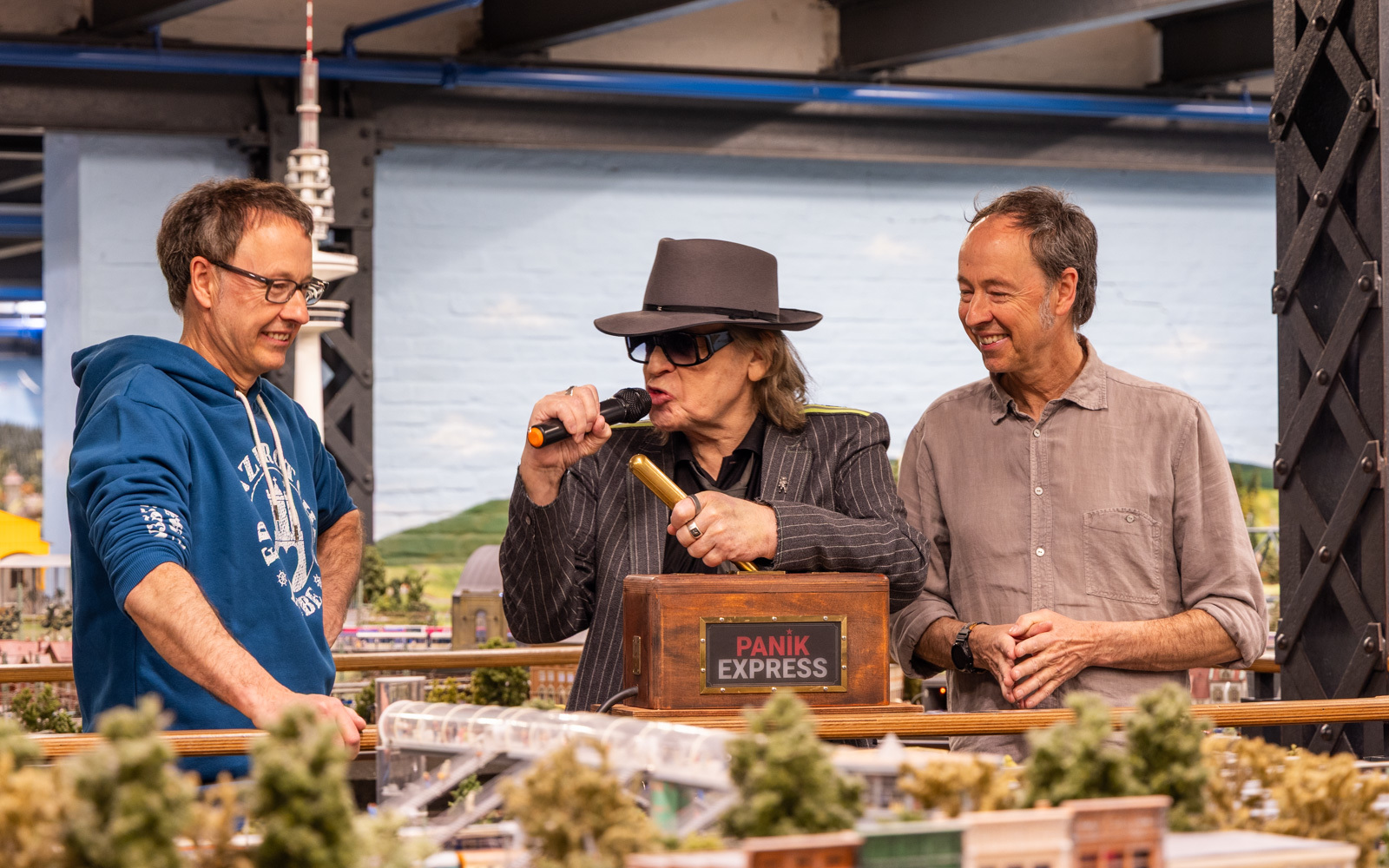
A train that doesn’t just run—it tells the story of an entire life: The “Panik-Express” is now an extraordinary new highlight here at Wunderland. Over the past few months, we’ve worked with Udo Lindenberg to create a model that brings musical history to the rails in a unique way.
On March 24, 2026, Lindenberg personally sent the train on its journey—thereby launching a rolling journey through time spanning eight decades of his life. Eight elaborately designed cars showcase key milestones in his career, bringing the past and present to life on a 1:87 scale.
From his childhood in Gronau through his early years as a musician to defining moments in German-German history: the “Panik-Express” combines personal memories with historical scenes. Iconic chapters such as the connection to the special train to Pankow or encounters with figures like Erich Honecker also find their place on the train—staged in rich detail, with a surprising twist, and a touch of humor.
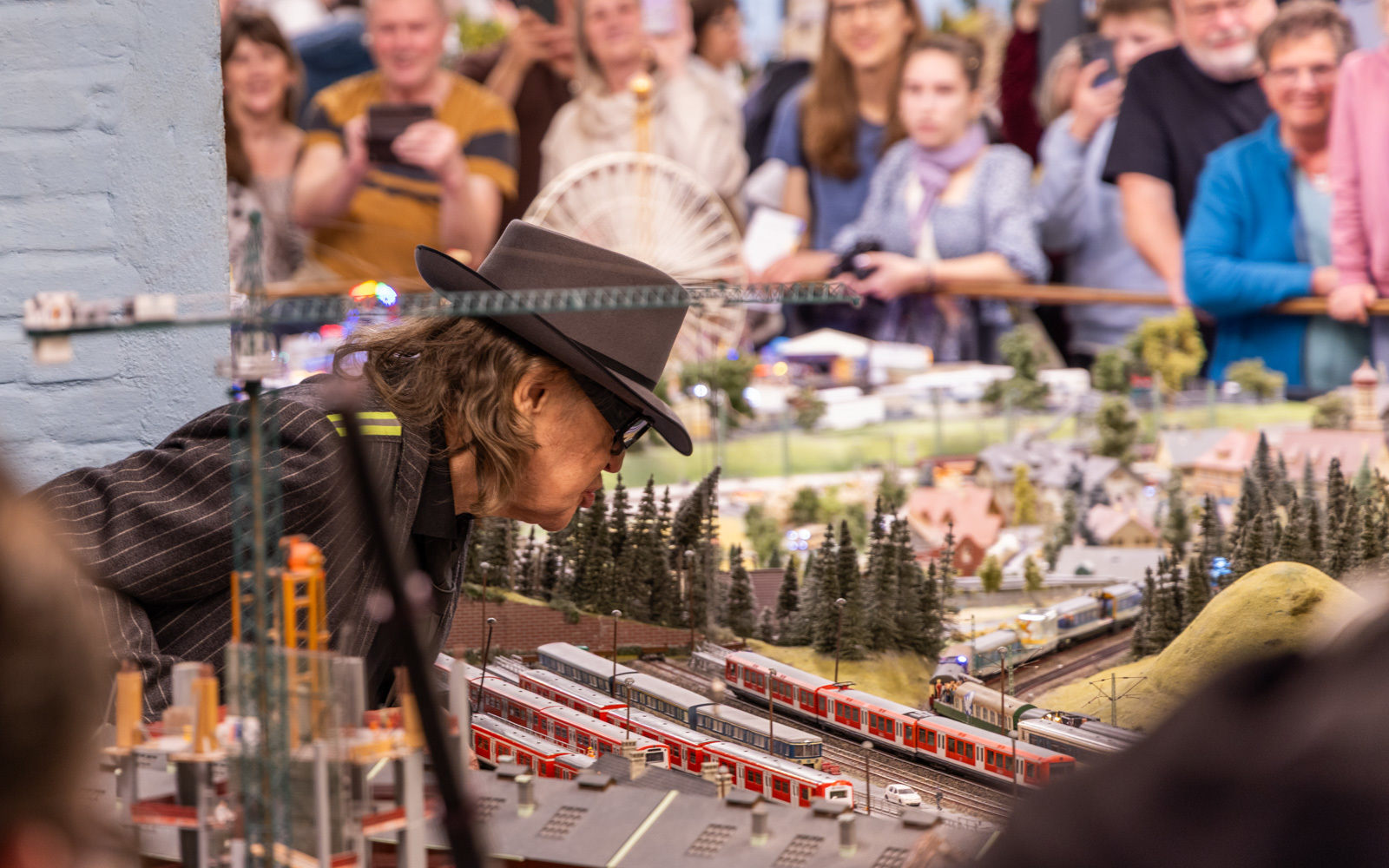
A special focus is placed on the narrative depth of the model: each wagon becomes a stage. Whether it’s first musical steps, legendary performances, or personal turning points—the train doesn’t just showcase stops; it tells stories. Even more recent successes, such as the hit “Komet,” become part of the production and bring the train right up to the present day.
For Wunderland founders Frederik Braun and Gerrit Braun, the project is one of the most elaborate of recent years. Countless hours of model building, creative ideas, and technical ingenuity have gone into the “Panik-Express.”
Starting now, the train runs through the Hamburg section of the layout. If you look—and listen—closely, you’ll even discover musical details when it stops at Dammtor Station. Because this train doesn’t just carry stories. It brings them to life.
The locomotive:
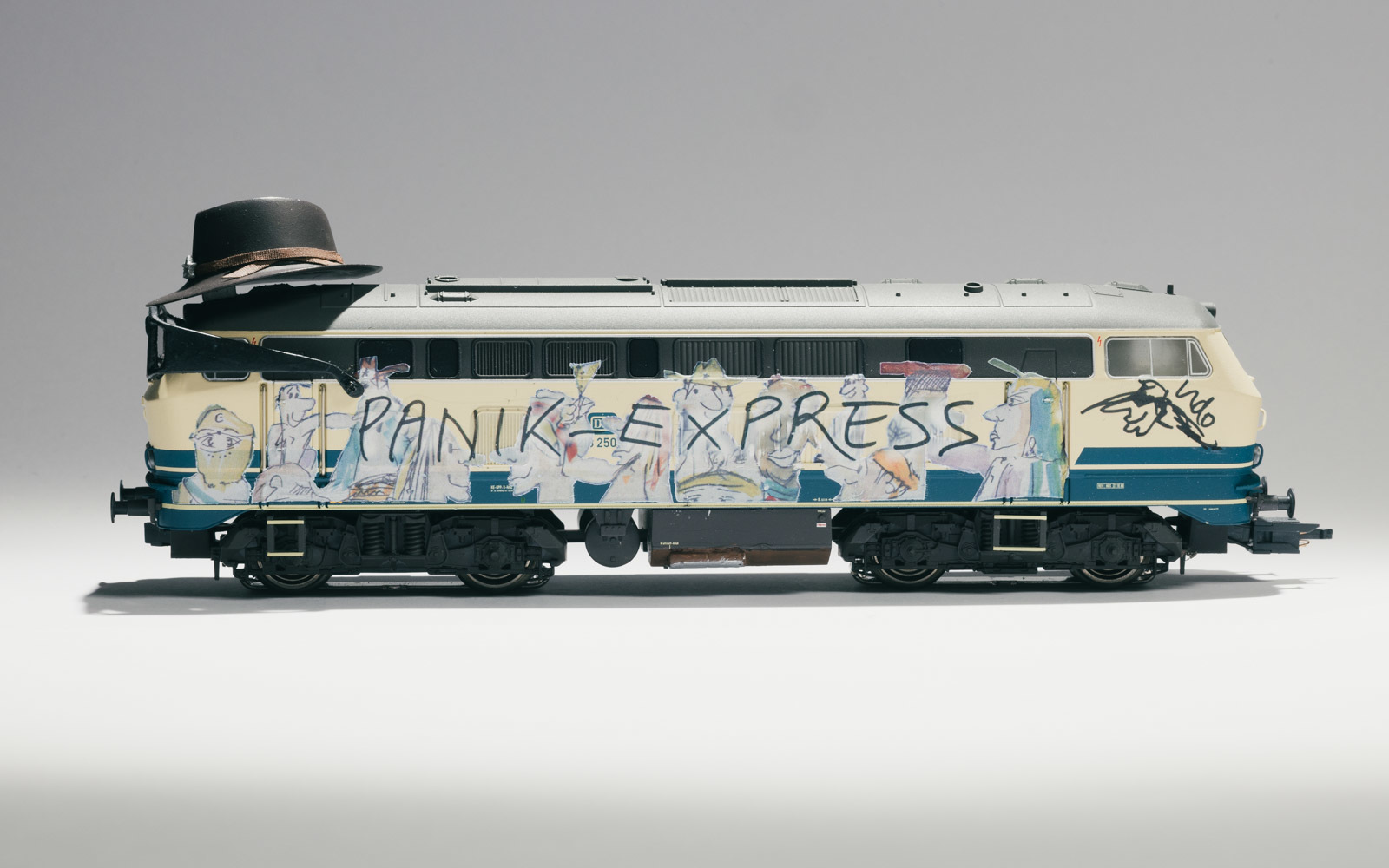
The locomotive’s design combines his artwork “Menschenfamilie 1” with his personal signature and a miniature portrait. His characteristic glasses and hat were produced true to scale using 3D printing. The locomotive brings the story full circle, connecting back to the legendary “Sonderzug nach Pankow.”
Wagon 1 – the 1950s:
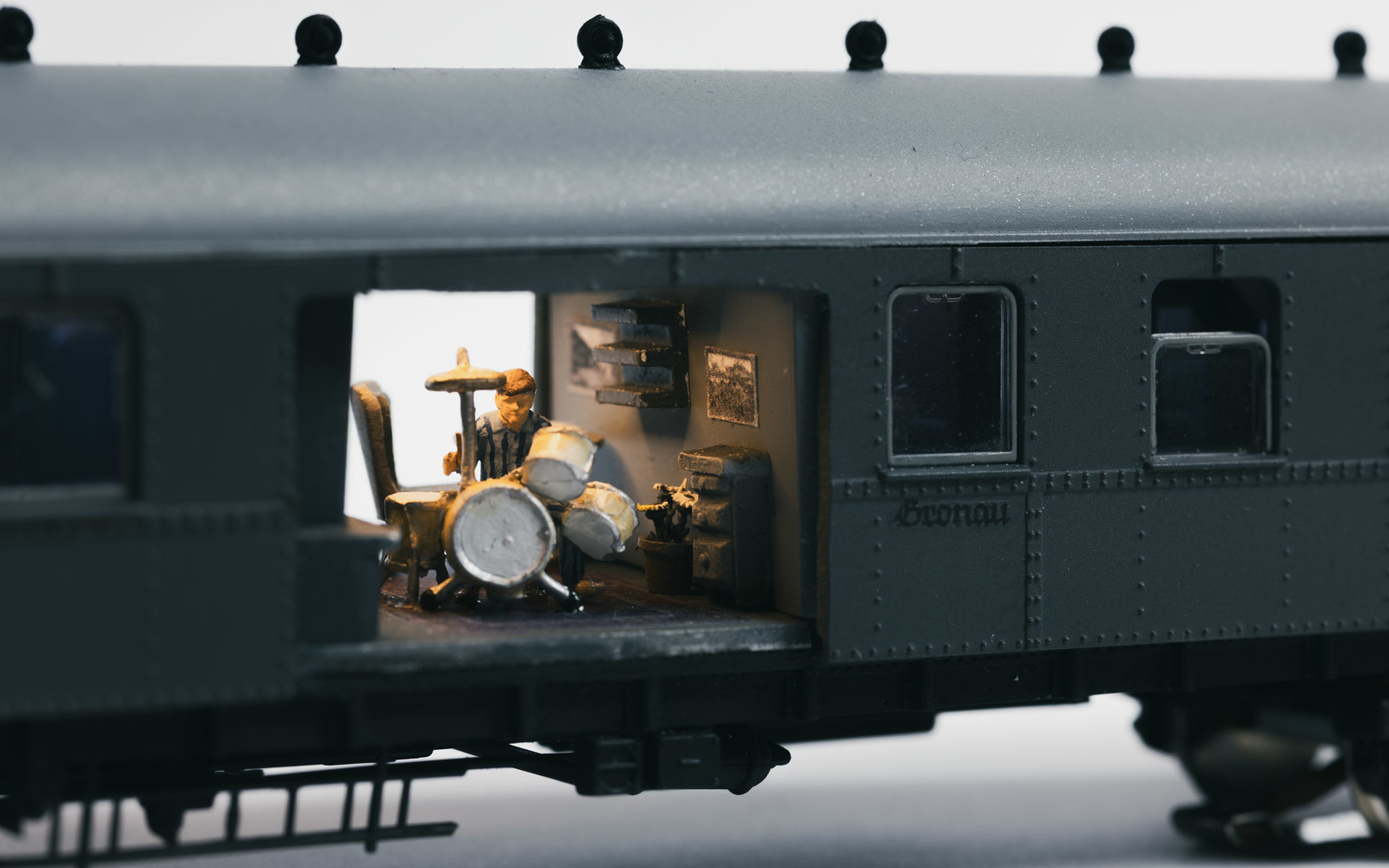
The first wagon takes us back to Udo’s hometown of Gronau. Like a photograph from a bygone era, the entire scene is rendered in black and white to highlight the middle-class constraints of that time. The only splash of color is Udo with his first drum set, marking the moment when music and new possibilities entered his life.
Wagon 2 – The 1960s:
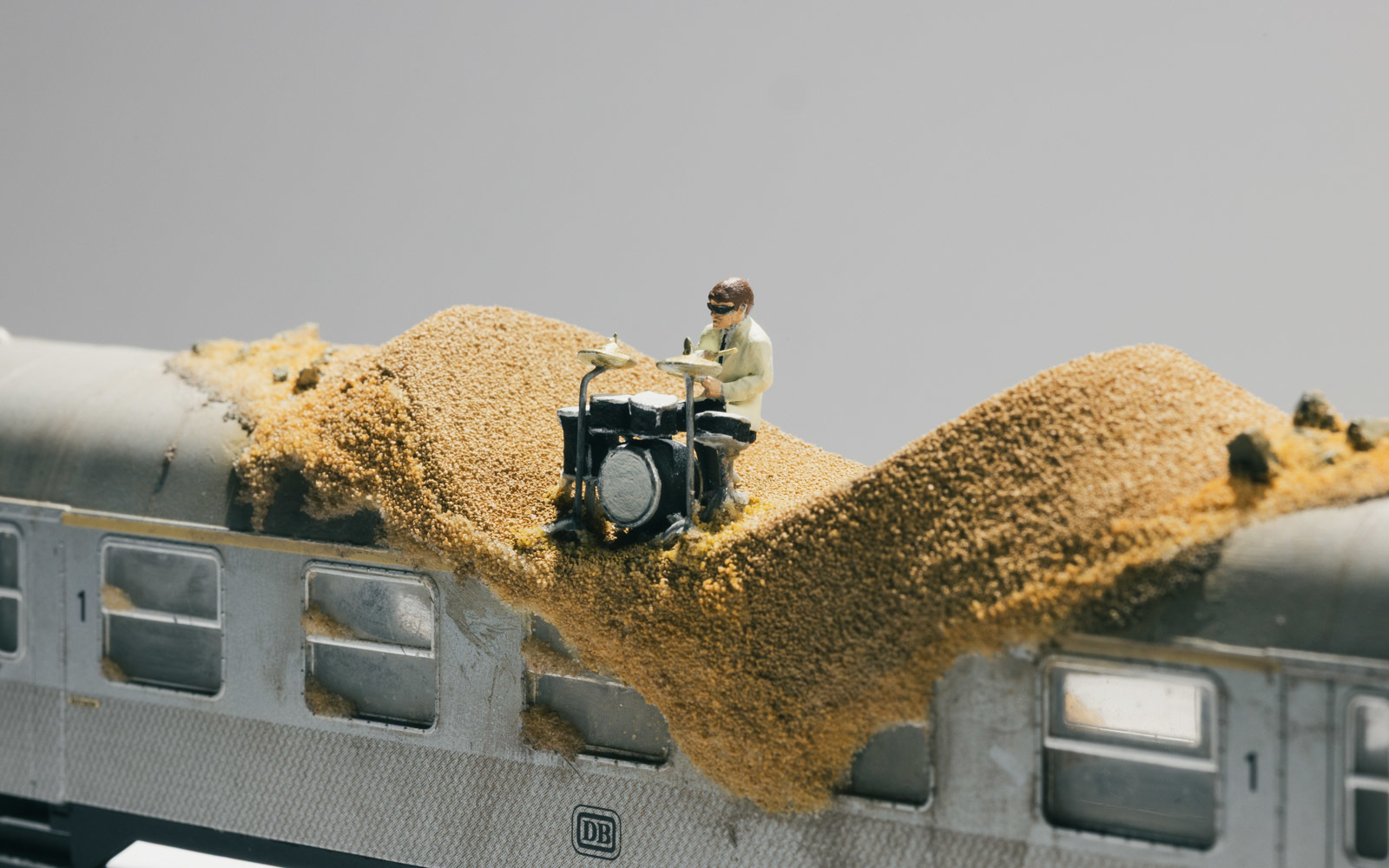
Udo spent a formative year as a young drummer at the Libyan Air Force base in Wheelus. While desert sand covers the roof of the car, inside you can see the bars where he used to play through the night and laid the foundation for everything that followed.
Wagon 3 – The 1970s:
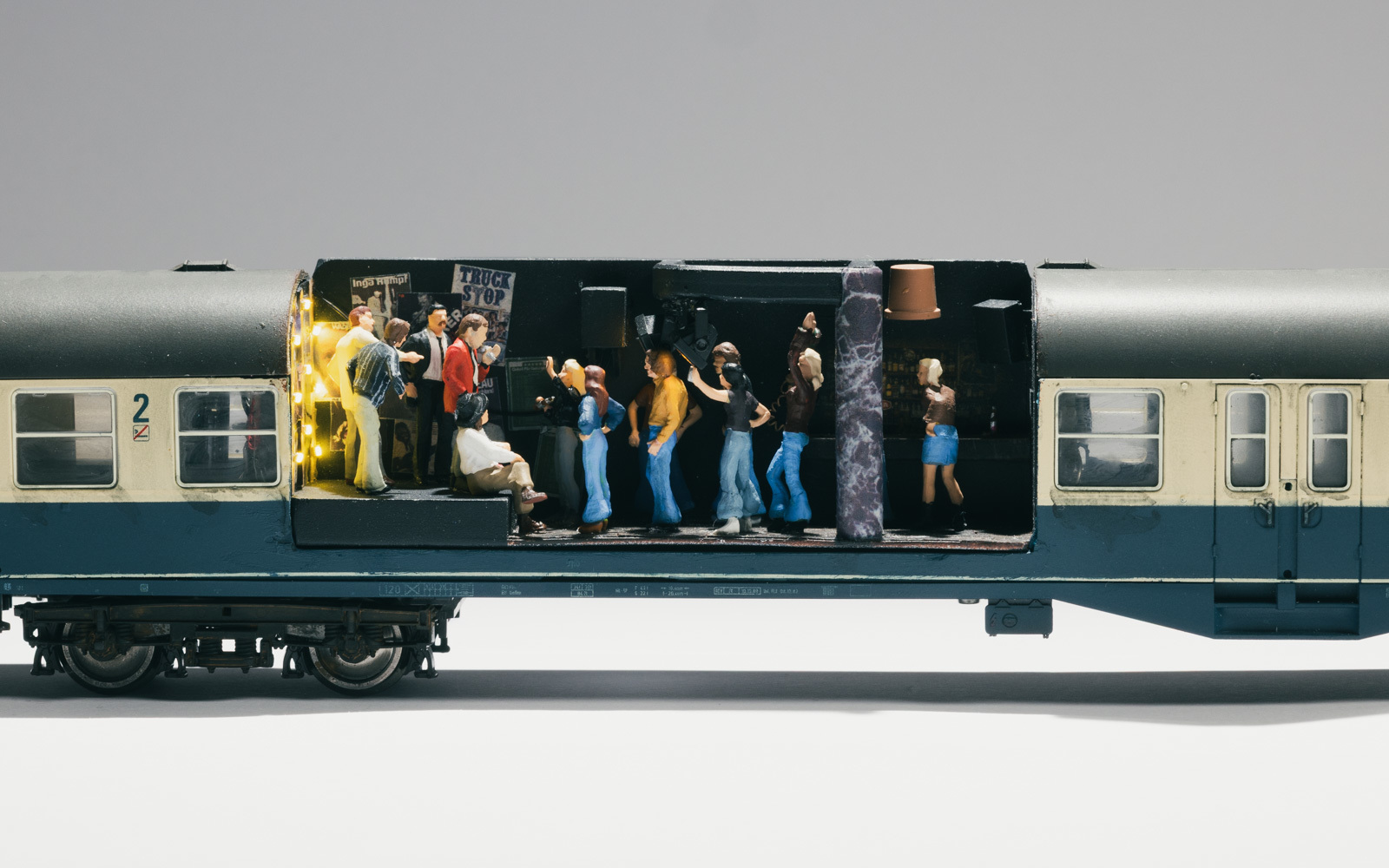
The era of the “Panikorchester” began in Hamburg-Eppendorf. This wagon shows the facade and interior of the legendary scene hangout “Onkel Pö's Carnegie Hall,” where Udo took the decisive step from the drums to the microphone, thereby revolutionizing German rock music.
Wagon 4 – The 1980s:
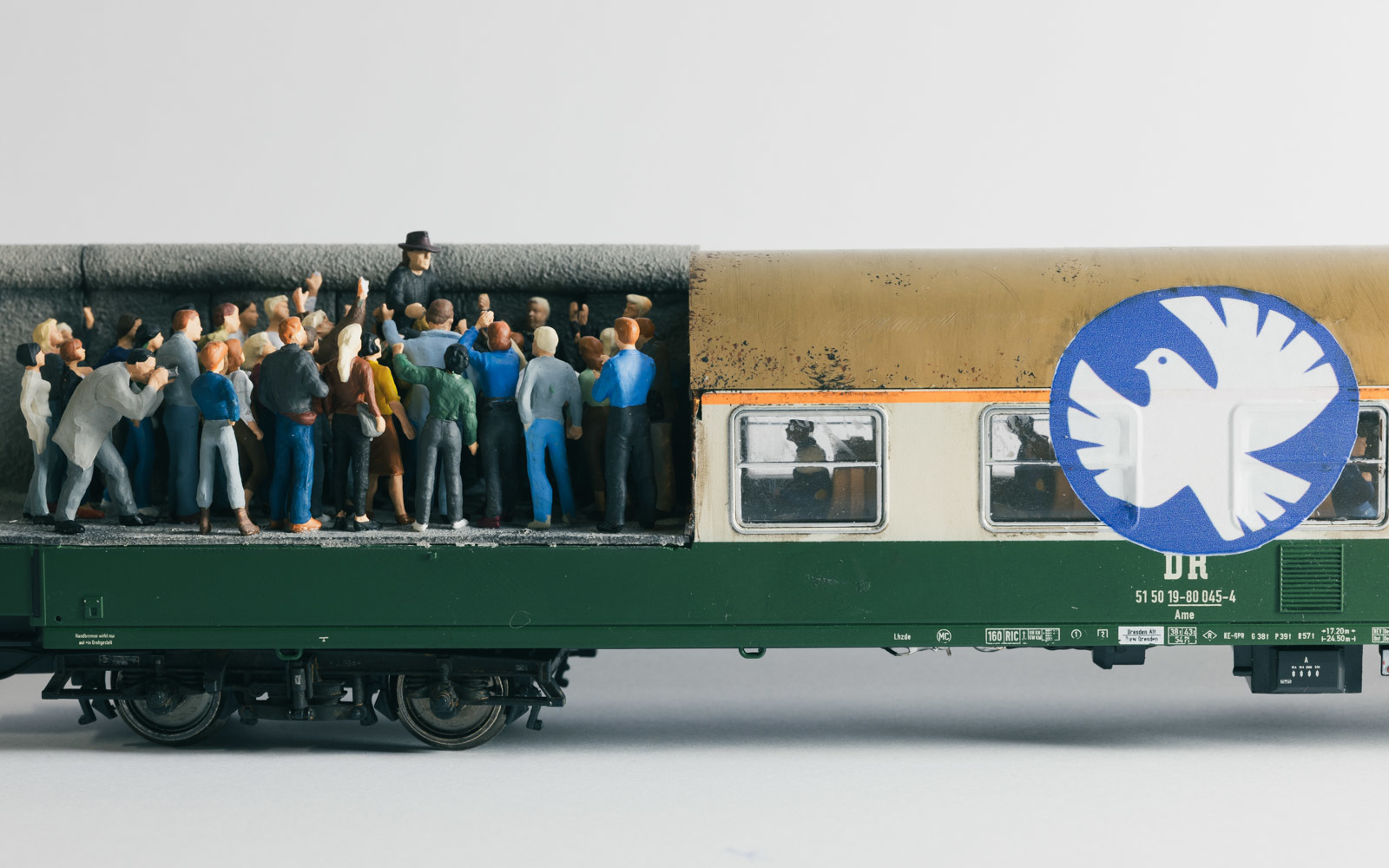
The wagon recreates the historic 1983 concert at the Palace of the Republic. Inside the illuminated interior, the audience selected for the propaganda event sits in blue FDJ shirts. Outside, Udo meets his real fans at the Berlin Wall and is lifted onto their shoulders.
Wagon 5 – The 1990s:
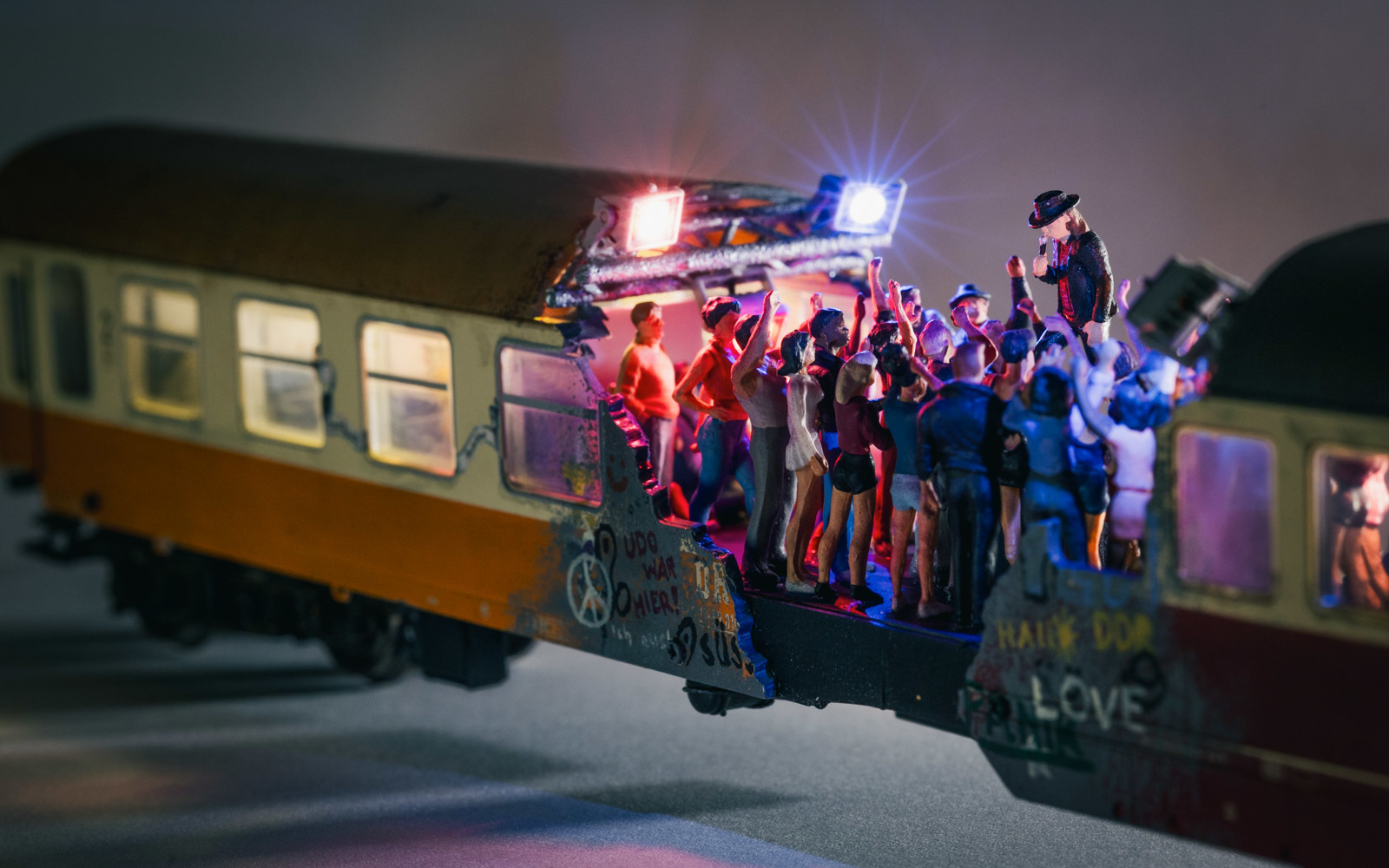
This wagon depicts German reunification. It consists of two halves joined in the middle to form an open stage. One half features the design of the GDR Reichsbahn, while the other side is styled as a West German Bundesbahn car. Standing on the stage amid a replica of the fallen Berlin Wall, Udo performs for his fans just as he did on his 1990 tour of the GDR, symbolizing the end of the division.
Wagon 6 – The 2000s:
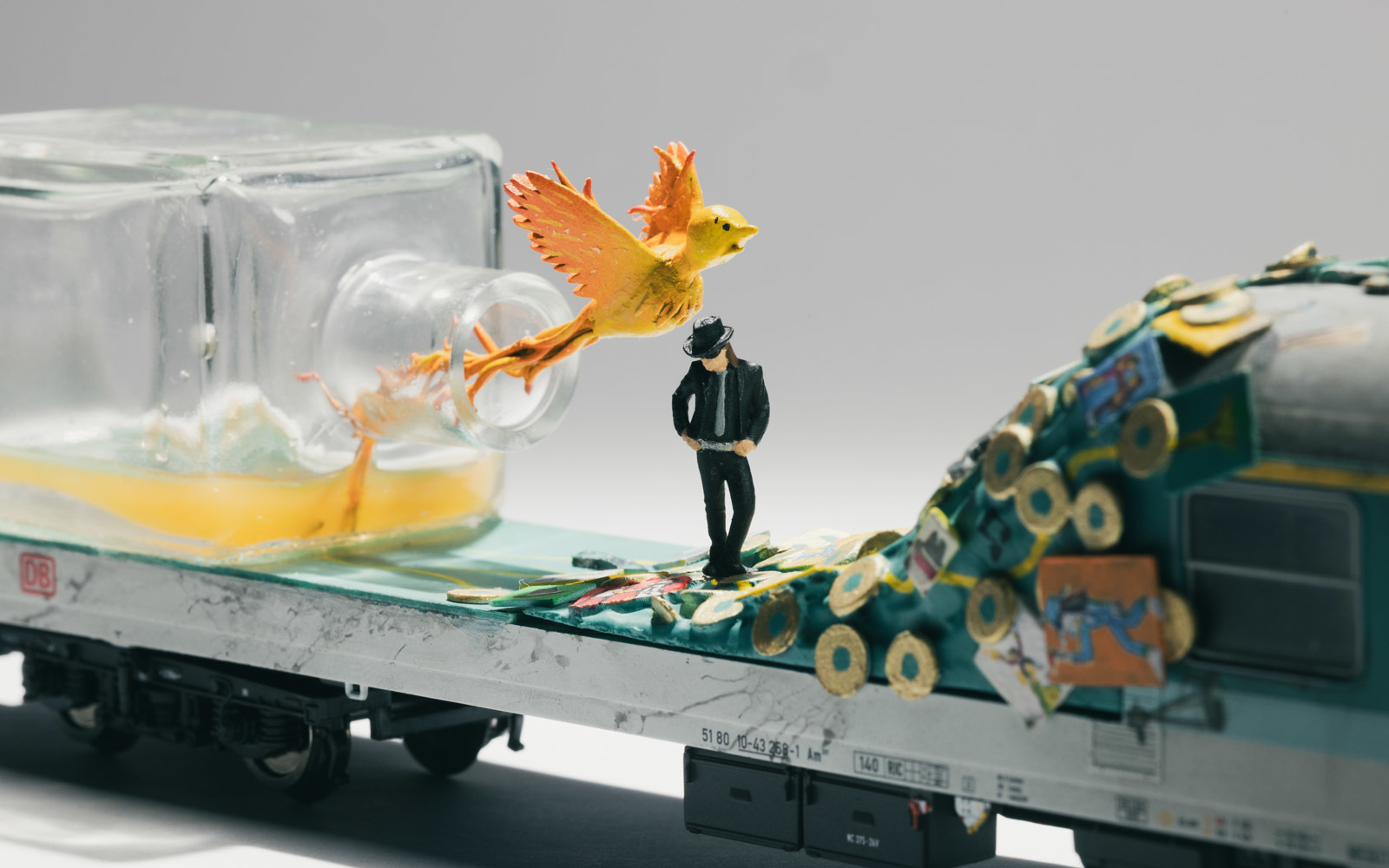
This wagon takes up Udo’s motto, “Phoenix from the Bottle,” illustrating his liberation from alcohol. You can see the empty bottle from which a phoenix rises, sweeping away a wave of paintings, gold records, and awards. Udo is depicted in the pose from his comeback album “Stark wie Zwei.”
Wagon 7 – The 2010s:
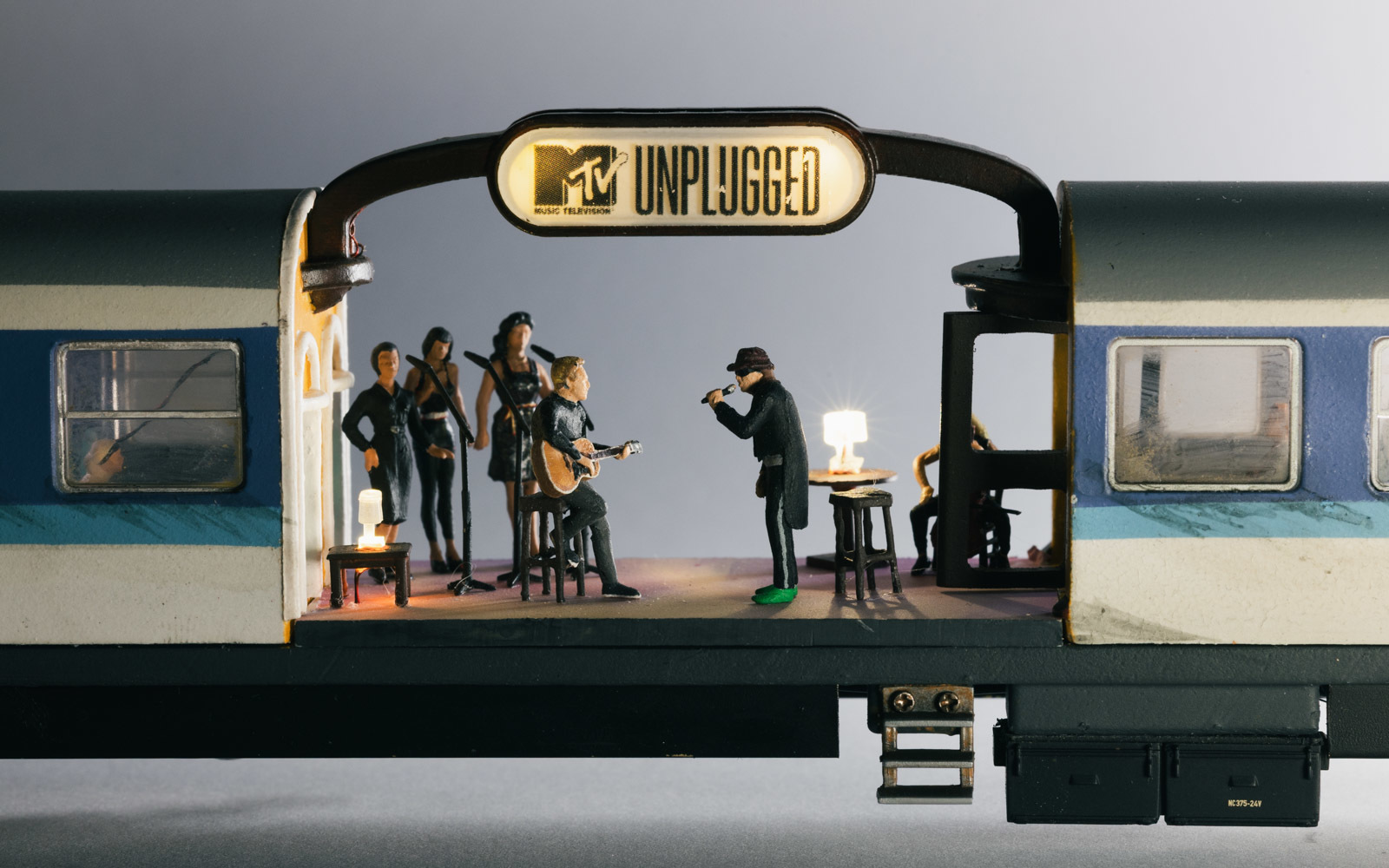
With its Zeppelin-inspired shape, this wagon draws on an iconic stage element from Udo’s stadium tours. It depicts the legendary 2011 MTV Unplugged concert, which went down in music history thanks to the duet with Clueso on “Cello.” The wagon thus highlights the artistic diversity of his live performances.
Wagon 8 – The 2020s:
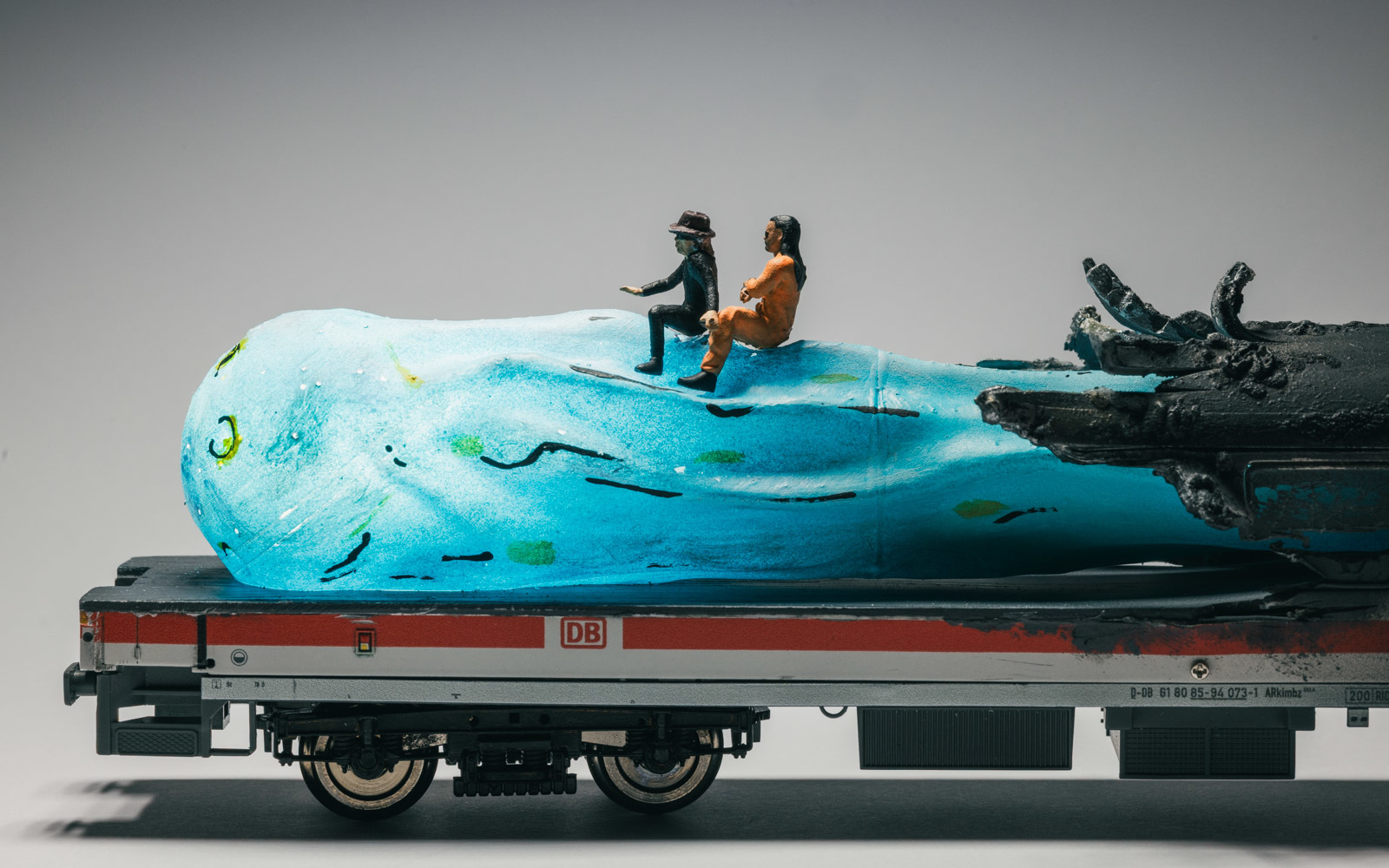
This wagon brings the parade to a grand finale, celebrating the record-breaking hit “Komet” by Udo and Apache 207. The two artists are seated on a brilliant blue comet’s tail that bursts out of the car. It symbolizes not only the immense success of this duet, but also the special bond between the two artists, who together bridge generations.