
Observatory
In the barren expanse of the Chilean Atacama Desert, humanity gazes into the cosmos using some of the world's most powerful instruments—and this backdrop is also recreated in Wunderland. At the center of it all is a detailed replica of the Extremely Large Telescope.
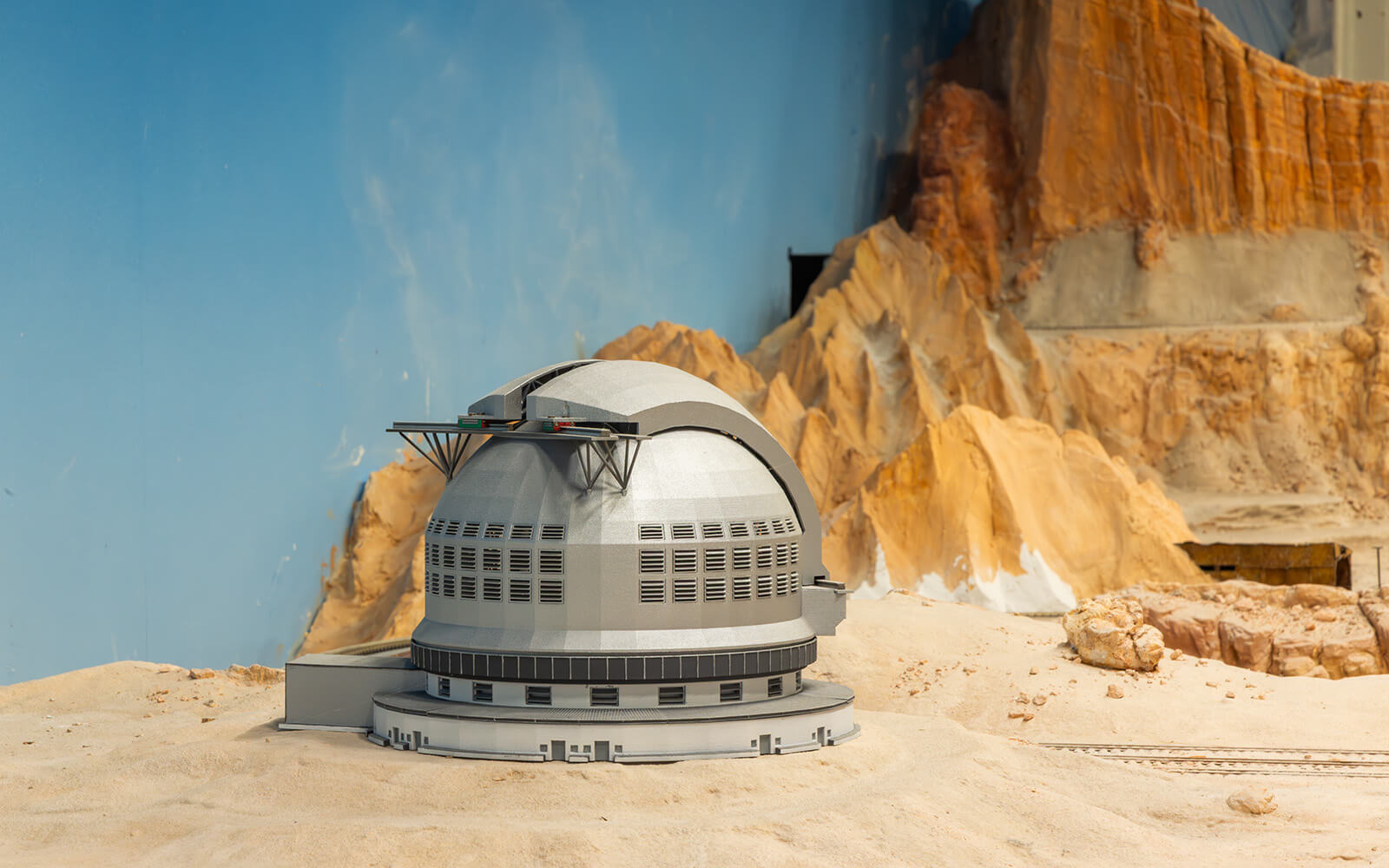
The Extremely Large Telescope (ELT) is currently under construction in Chile and will be the world's largest optical telescope. Its 39-meter main mirror, made up of nearly 800 individual segments, uses special technology to compensate for the flickering of Earth's atmosphere—ideal for searching for planets, signs of life, and the oldest galaxies. Since the actual giant telescope would have overwhelmed the entire section at the standard 1:87 scale, the team used a clever trick: tiny figures at a TT scale (1:120) are installed around the observatory. This difference in size makes the building appear even more massive and imposing to the eye. To perfectly replicate the dusty desert floor of the Atacama, the team developed its own custom sand mixture made of finely ground chamotte flour (from pottery supplies), cement, chinchilla sand, and pigment powders. Sifted and fixed with a water-glue-dishsoap solution, the reddish-brown rocks and light sand areas create a spectacular contrast against the bright white of the telescope dome and the deep blue sky.
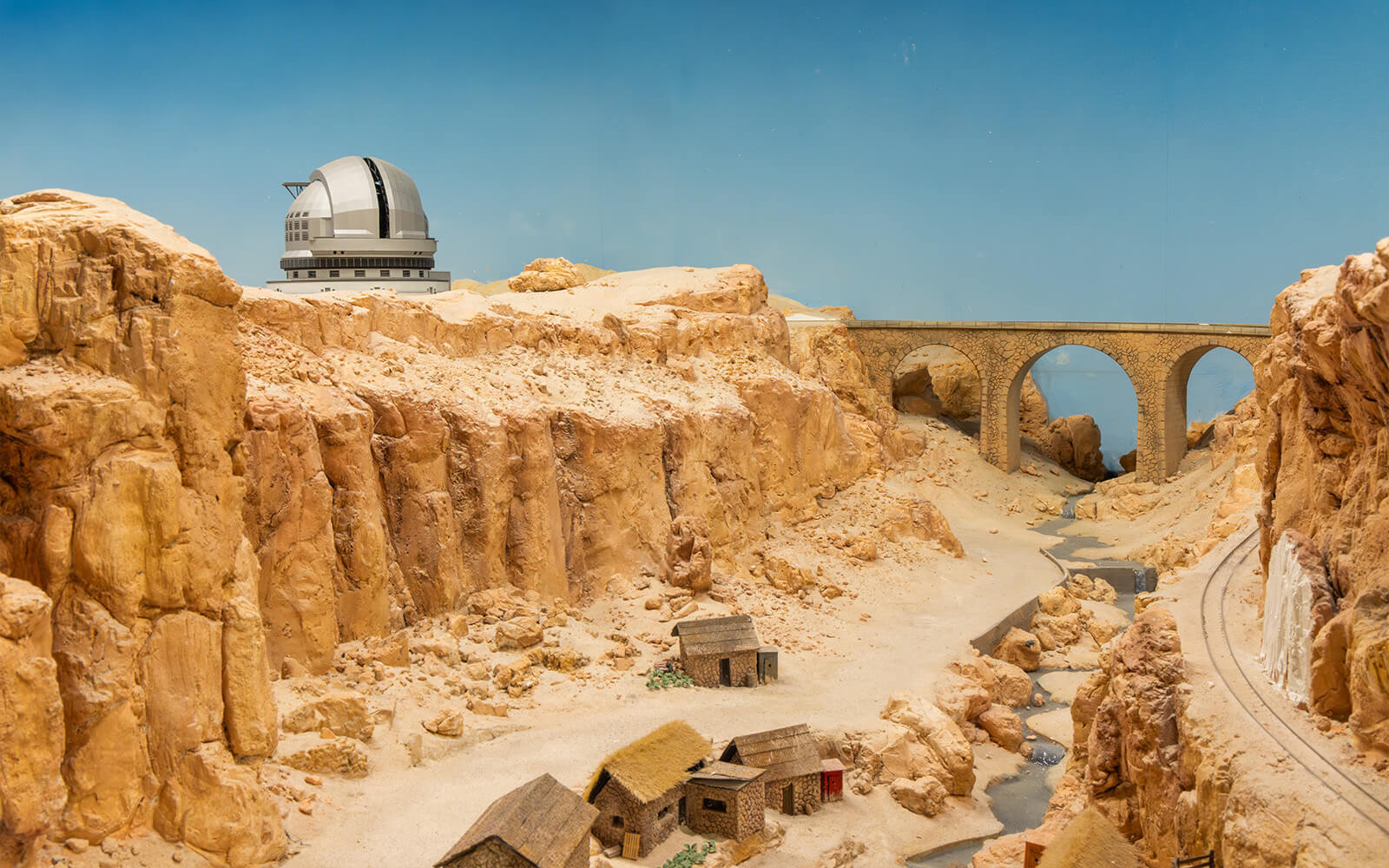
The technical core of the observatory is an intricate movement mechanism: the dome not only rotates, but also opens synchronously. As soon as the roof parts, a projector hidden inside casts a crisp, realistic starry night sky directly onto the wall. Yet it is not only the view toward the heavens that captivates: not far from the telescopes lies the salt flat Salar de Atacama, where a remarkable display of meticulous craftsmanship can be admired. 350 individual flamingos stand on the lake. To ensure their stability, 700 legs were manually cut off and replaced with fine spring steel. Above them, another 70 flamingos hover on a delicate flight mechanism, with 3D-printed figures simulating an elegant bird flight across eight flight phases. The observatory is thus a breathtaking interplay of science, nature, and passion for detail.