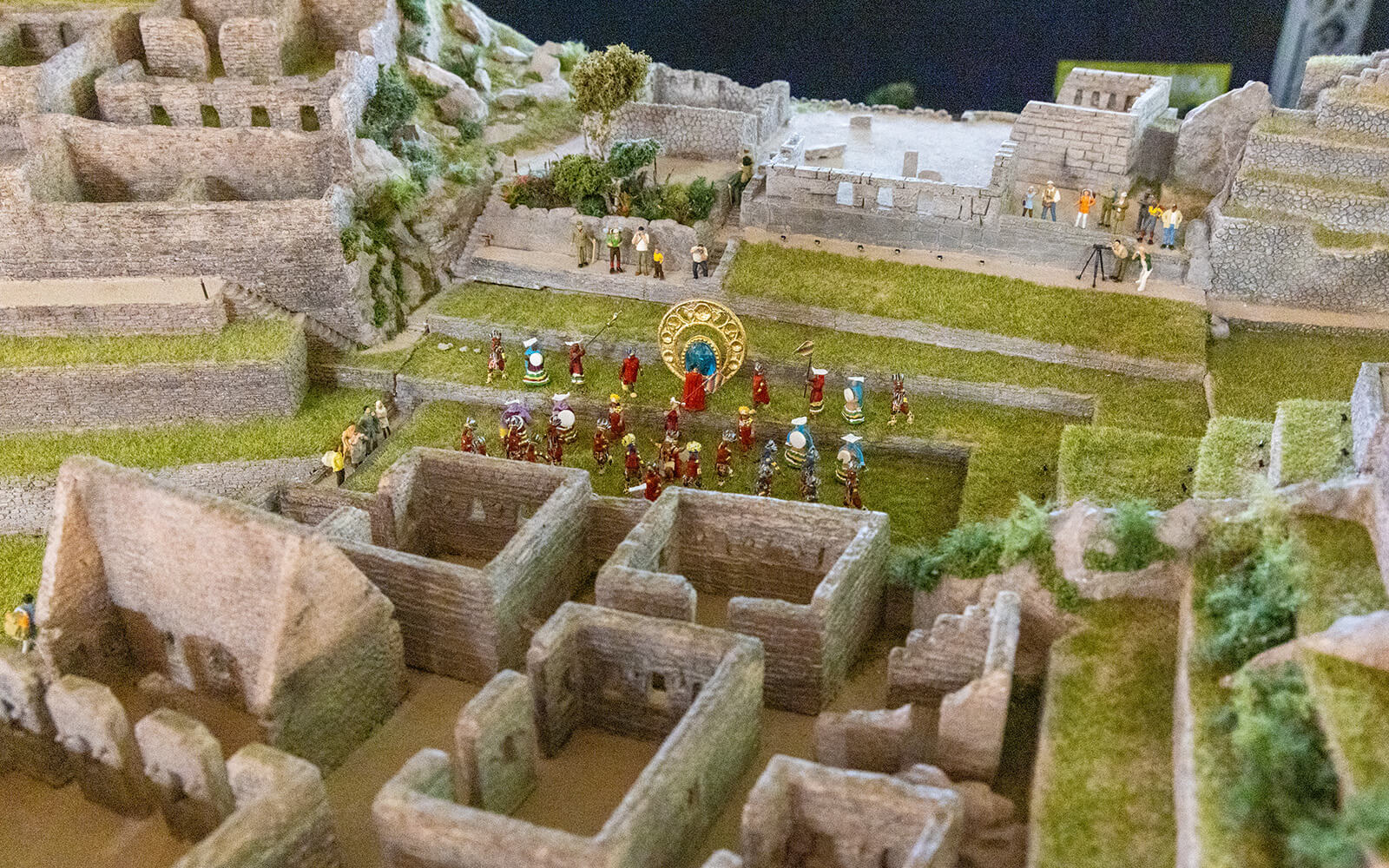
The path to this highlight once again began with genuine field research: several core team members traveled to Peru, climbed the sacred mountain, and documented sightlines, Inca stonework, and terrace structures in countless photos and sketches. Back in the workshop in Hamburg—and in Pilar, Argentina—the biggest scale challenge in Wunderland history was waiting: the massive Inca city simply did not fit into the designated area. As a result, Machu Picchu was built at a 1:120 scale instead of 1:87 and staged using forced perspective. The buildings in the background are smaller than those in the foreground, tricking the eye into perceiving immense depth.
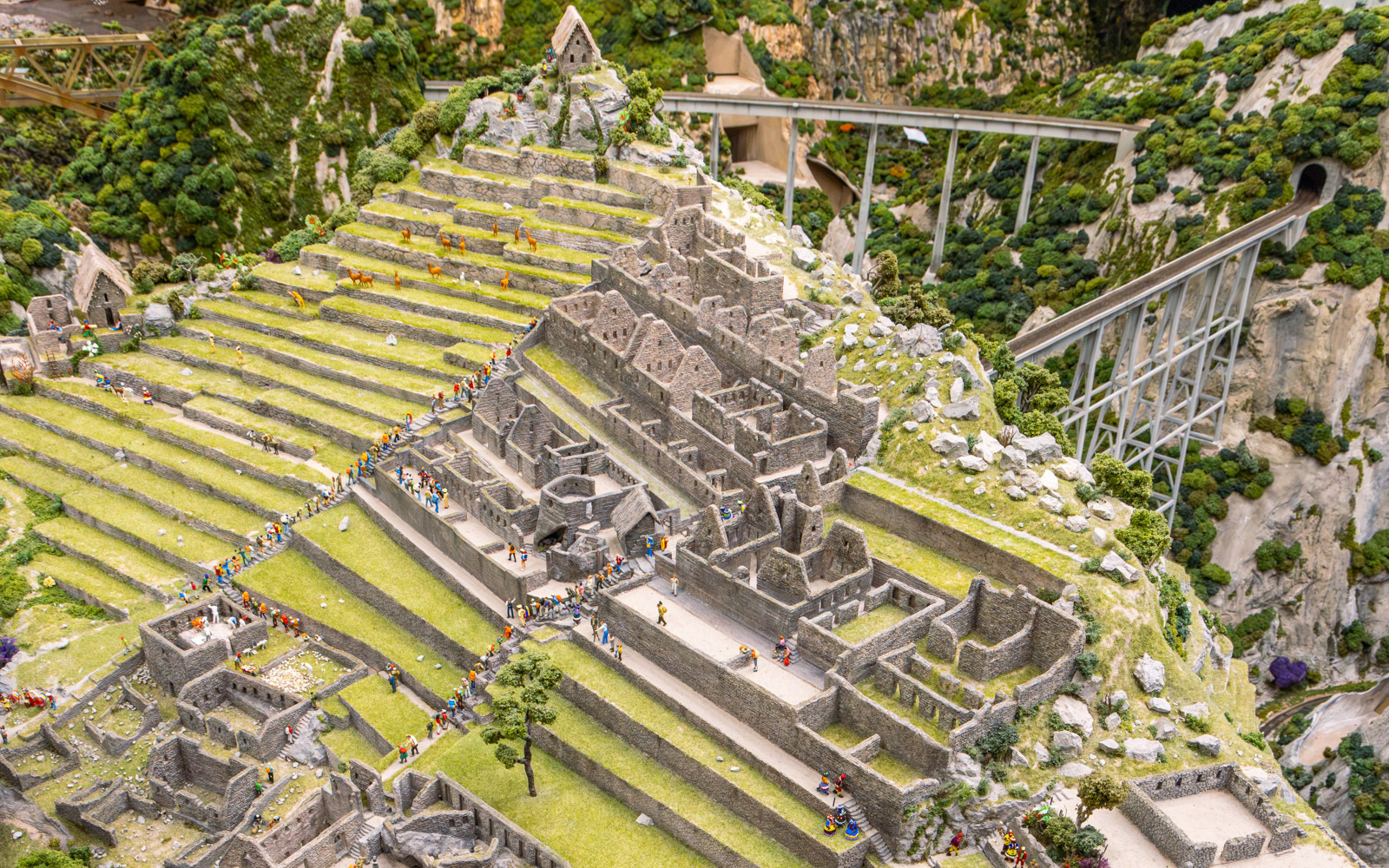
Key sanctuaries, such as the noble Temple of the Sun, were produced via precise 3D printing with seamlessly fitted megalithic stones. Simpler residential buildings, on the other hand, consist of laser-cut polyol sheets with irregular stone textures. The steeply sloping terraced hillsides were constructed from multiplex wood, modeled by hand with plaster, and engraved section by section. At the push of a button, visitors can trigger an interactive carillon inside the wooden substructure. Cleverly disguised beneath natural materials and artificial plants, the functional mechanics remain invisible, preserving the perfect illusion of the Inca ruins.