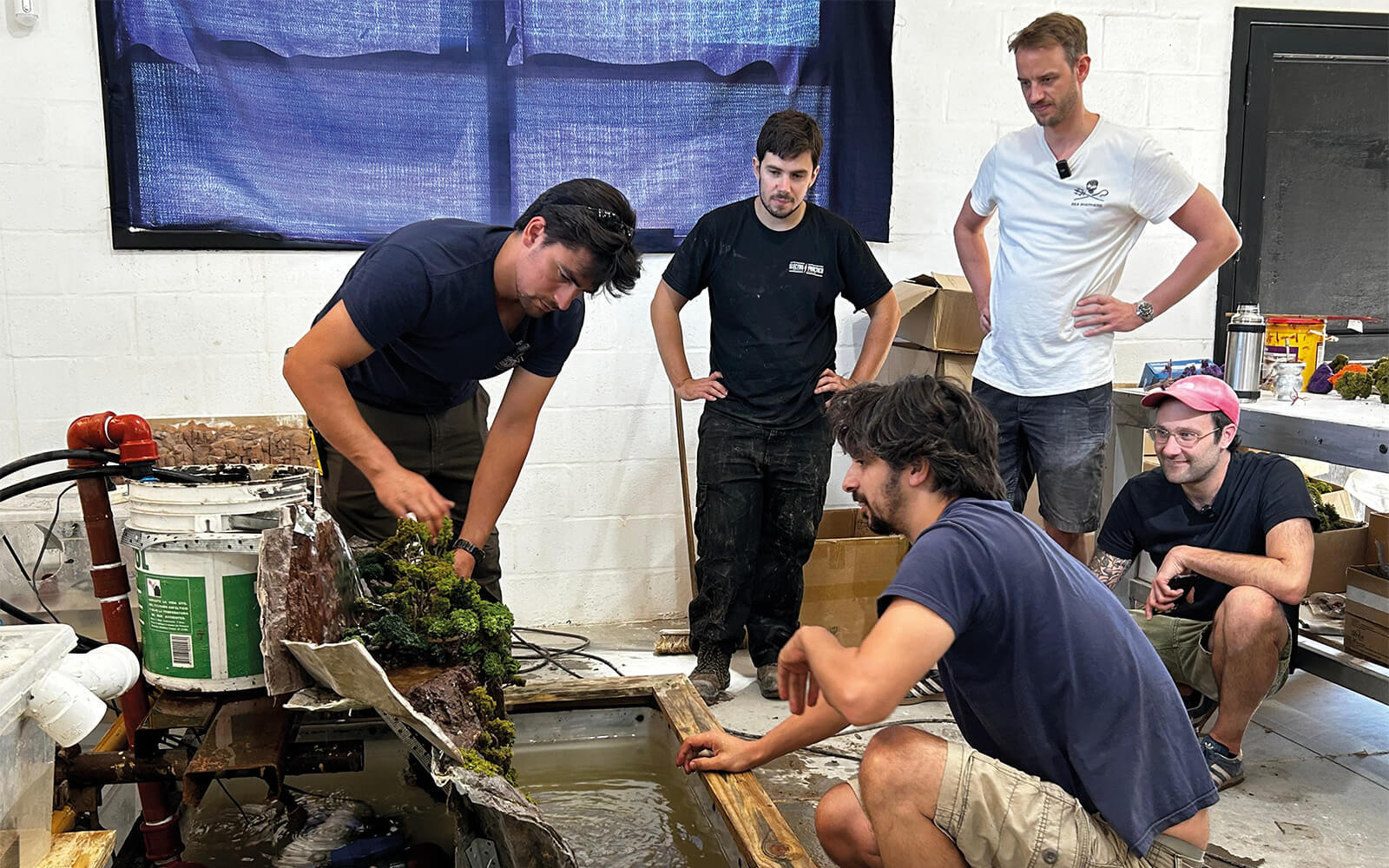
Water simply cannot be physically shrunk on a 1:87 scale—otherwise, individual droplets would act like thick, viscous syrup. To nevertheless create a breathtakingly realistic waterfall scene with dense spray, model builders rely on real, flowing water and two sophisticated water circuits. The main circuit is based on a 1,000-liter tank filled with about 800 liters of water. During normal operation, a high-performance pump delivers an impressive 25,000 liters of water per hour (about 420 liters per minute) through a cooling and UV unit directly onto the rock edges. Specially constructed catch basins and guide edges break the current so delicately that a spectacular cloud of spray is formed. Through a controlled return system, the water flows back with a slight delay, ensuring that a visible water level is always maintained.
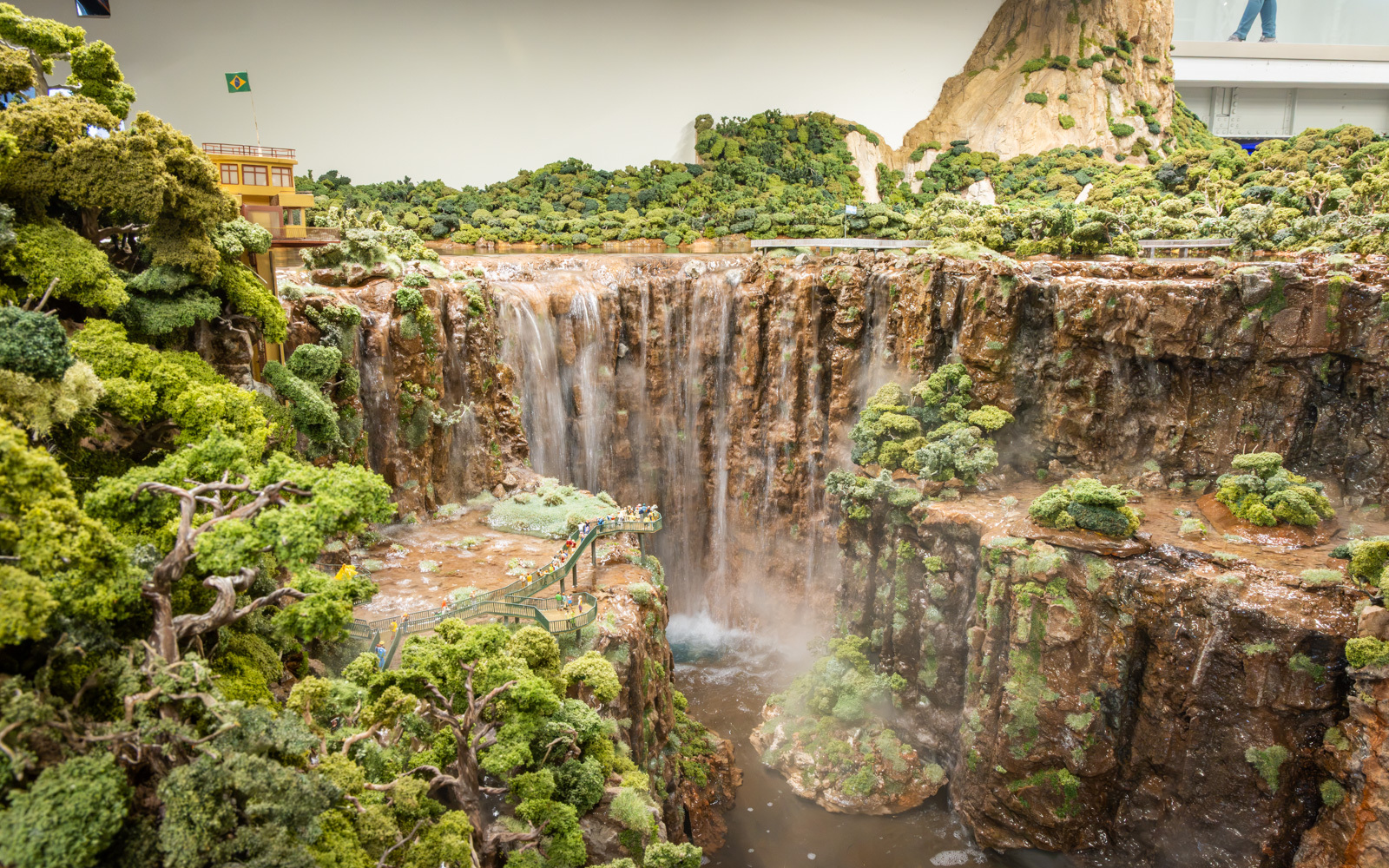
The second circuit provides the perfect tropical atmosphere: drawing from a 50-liter tank, a smaller pump feeds three fog boxes where ultrasonic atomizers generate fine water vapor. Three times a day, the rainy season begins in the rainforest section—a second pump then kicks in, boosting the flow rate to a massive 35,000 liters per hour (approx. 590 liters per minute). During this phase, a projector displays a magical rainbow directly onto the rising mist. Behind the scenes, the biggest hurdle was long-term reliability in continuous operation: to prevent resinification, limescale buildup, leaks in the wooden structures, and mold underneath, the model builders engineered a clever protection and ventilation system. As a result, the Iguazu Falls are not only a visual highlight, but also a true masterpiece of Wunderland hydrology.