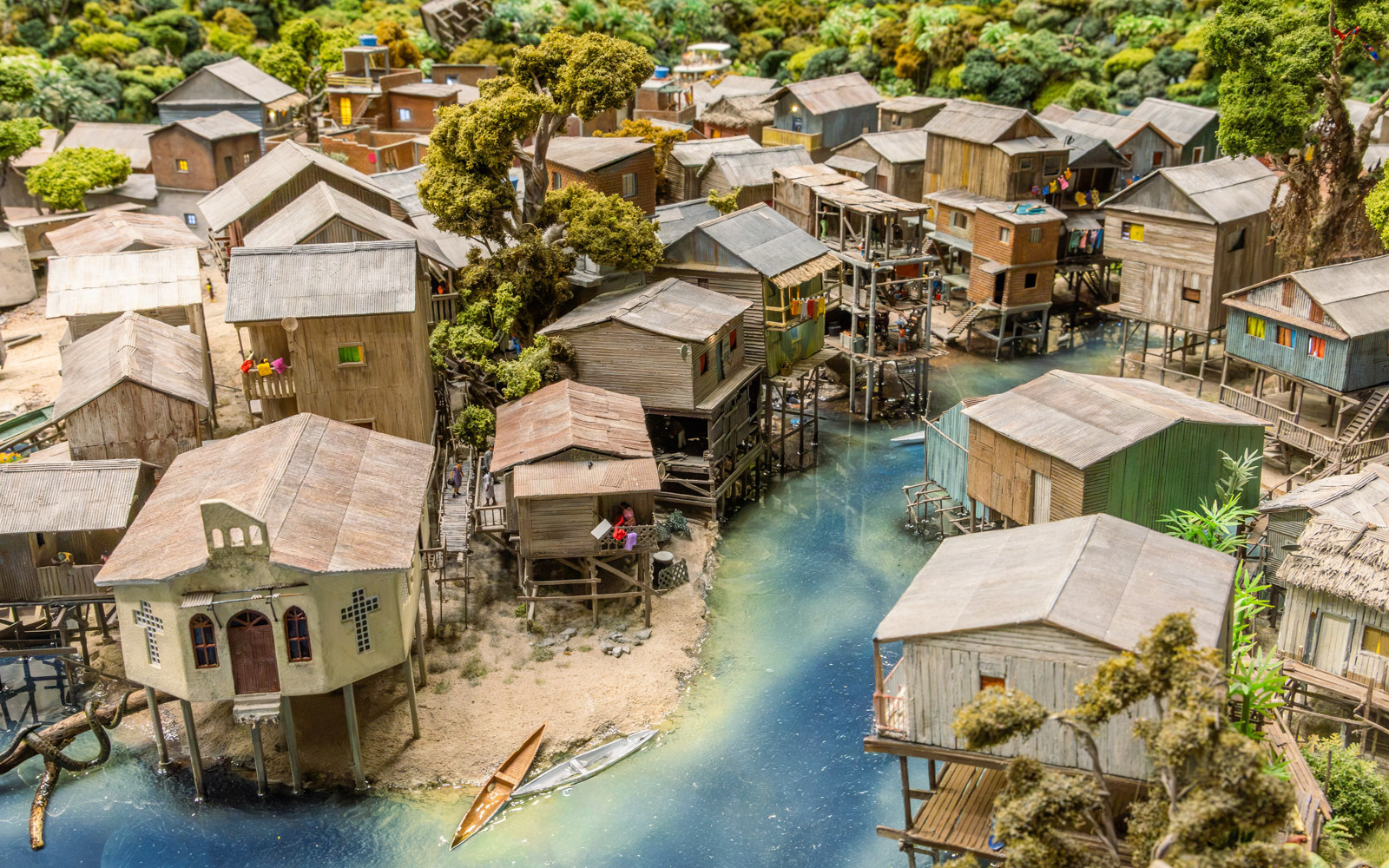
For the main tree canopy alone, nearly 30,000 handcrafted trees, bushes, and undergrowth elements were planted. The majority were created through meticulous handwork, in which multiple wires were twisted together and shaped into a dense canopy using texturing pastes, natural materials, and botanical flakes. For the front row, however, custom-made elements made of balsa wood, resin castings, and 3D-printed parts were used. To realistically recreate the humid, misty atmosphere of the rainforest, the leaves were given not a matte finish but a subtle satin sheen, making them appear dew-covered. Amid this verdant splendor lie settlements such as Manaus, featuring 71 delicate houses built on stilts that have grown organically over generations, connected by narrow footbridges and equipped with small water tanks to combat local water shortages. The river is bustling with 11 large ships and 93 small boats.
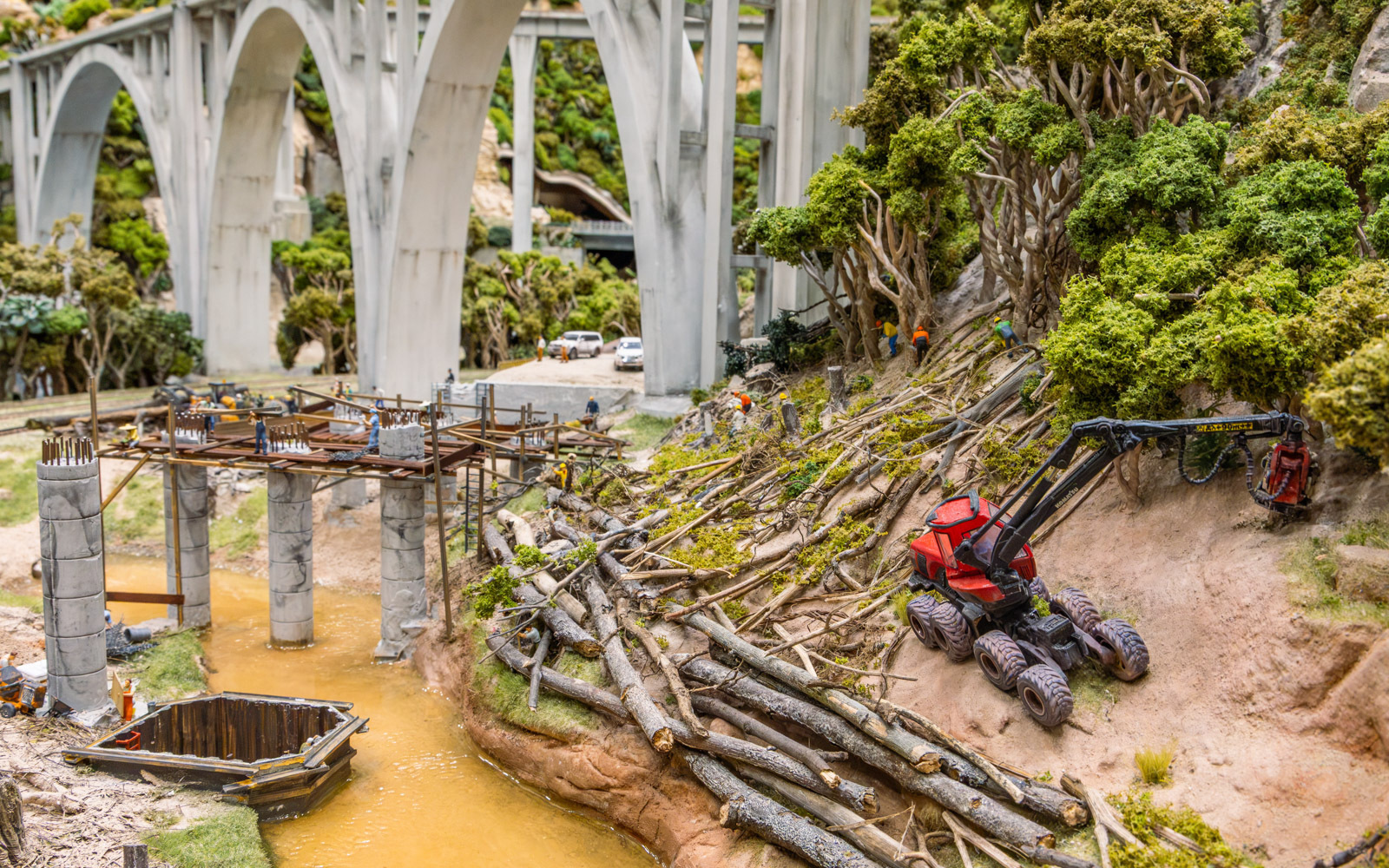
Alongside these natural wonders, the threats to the rainforest—including deforestation, illegal gold mines, road construction cutting through the forest, and a massive wildfire—are also evident.
From a technical standpoint, this area of the jungle showcases truly pioneering work. For the first time, the famous car system doesn’t run on asphalt here, but instead winds its way through deep, impassable mud—all the way to a stuck truck, which is pulled out by a small tractor using an interactive mechanism. The ferry operation gimmick is also a highlight: A linear drive hidden beneath the riverbed silently pulls the wooden river ferry across the water. Cars roll onto the ferry, are stopped by a de-energizing magnet, and continue on the other side of the river via folding ramps. At the edge of the attraction, there’s also an interactive junkyard workshop where cars are visually pimped up with welding and lightning effects.
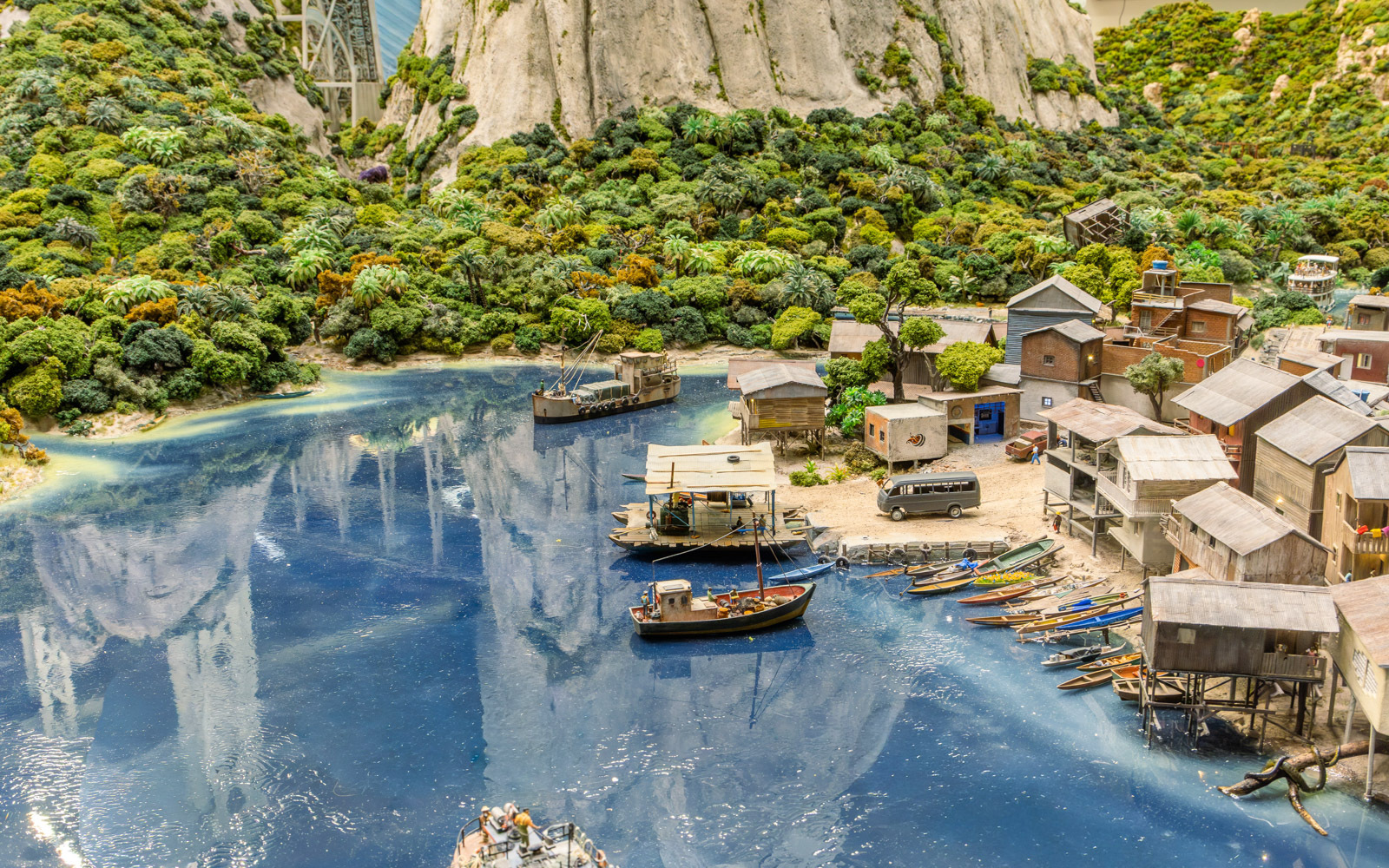
Pouring the riverbeds was a thrill in itself: During some night shifts, 55 liters of epoxy resin were applied using protective clothing, special extraction systems, and activated carbon filters. Since the riverbed was first dyed and then coated with clear epoxy resin, the colors of the Amazon range from a light blue along the banks to a muddy mangrove brown. Air bubbles were removed using Bunsen burners and hot-air blowers before the team stamped waves into the surface with sponges and stamps during the perfect curing window. If you look very closely, you can even spot a small, hidden “Love” inscription in the water. In and along the river, a colorful array of wildlife comes to life: in the water, pink river dolphins, river crabs, and salamanders swim their courses, while on the muddy banks, crocodiles, poison dart frogs, and laid-back capybaras linger. In the adjacent thicket, you can spot jaguars, llamas, snakes, and parrots—and, as a little nod to the imagination, even Marsupilamis. When the jungle night finally falls, we deliberately forgo streetlights: moonlight reflections on the glistening resin-rich water and small campfires bathe the Amazon in a magical glow.